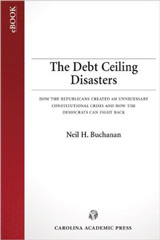
In this second of a series of columns on the recent uproar over U.S. federal debt surpassing $40 trillion, law professor and economist Neil H. Buchanan examines the scope of government borrowing, including debt crises and interest-rate effects. Professor Buchanan argues that the headline number itself is not the real problem; what matters is whether debt grows unsustainably and, more importantly, whether the government borrows for productive public purposes rather than wasteful or politically motivated spending.

Law professor and economist Neil H. Buchanan discusses the public debate over the U.S. federal debt, focusing on how media coverage of the “$40 trillion debt” relies on confused, misleading, or context-free comparisons and on basic terminology mistakes such as mixing up debt, deficit, gross debt, and net debt. Professor Buchanan argues that the raw debt figure is not meaningful on its own and that sensible analysis requires context—especially debt relative to GDP—so scare-driven coverage distorts the real fiscal issues.