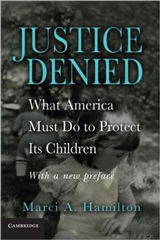
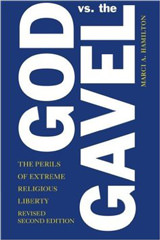
University of Pennsylvania professor Marci A. Hamilton discusses the breakdown of productive religious discourse in American public life, arguing that the religious right has seized control of the conversation through strategic framing, the appropriation of the undifferentiated label “Christian,” and the suppression of inconvenient facts. Professor Hamilton proposes three corrective rules: insist on factual accuracy in policy debates rather than deferring to religious framing, recognize Christianity as a diverse category rather than a monolith, and embrace open theological disagreement among believers as a legitimate and necessary form of public discourse.

Child protection advocate Kathryn Robb reflects on the moral and ethical demands Christmas places on American Christians, particularly in how its message of compassion, humility, and dignity applies to society’s treatment of the sick, migrants, political discourse, and children. Ms. Robb argues that truly honoring the spirit of Christ’s teachings requires rejecting cruelty and indifference and embracing a deeper, character-driven commitment to kindness and justice beyond political or religious affiliation.

University of Toronto visiting law professor and economist Neil H. Buchanan discusses the disregard for legal and constitutional norms demonstrated by Donald Trump and supported by figures like Senator Lindsey Graham, as well as the co-opting of religious and patriotic ideals by the political right for partisan gain. Professor Buchanan argues that the defense of Trump’s actions undermines democratic principles and shared cultural values, and he highlights the disturbing alignment of some religious leaders with Trump’s divisive rhetoric despite their religion’s traditional teachings of compassion and unity.