Justia columnist and attorney David Kemp discusses two recent issues that have come up in recent news related to health and health policy. The first issue Kemp discusses is that of breast cancer prevention and treatment, in light of a New York Times op-ed written by actress and director Angelina Jolie. The second issue is the recent and alarming outbreak of bacterial meningitis in New York City, particularly among gay and bisexual men. Kemp compares and contrasts the two issues, arguing that there is no place for moral approbation or judgment in the prevention and treatment of these diseases or any others.

Justia columnist and Cardozo law professor Marci Hamilton discusses abuse in the world of sports, including school, amateur and professional sports. While child sex abuse has been a problem in this world, physical, emotional, and verbal abuse are far too common, and need to stop as well, Hamilton urges. She cites the example of Rutgers basketball coach Mike Rice, but stresses that Rice is far from alone in his abusive behavior. And, Hamilton notes, it is a problem that athletes looking for—or wanting to continue with—college scholarships feel that they have no other choice but to take the abuse. Hamilton asks us all to imagine sports as it should be: free of bullying and fear, and offers a model code of conduct for sports addressing the various forms of abuse that athletes may suffer, as well as reporting requirements when abuse does occur.

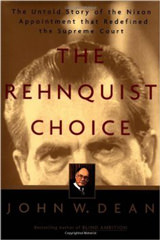
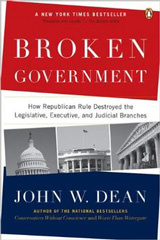
Justia columnist and former counsel to the president John Dean discusses the troubling conspiracy theories that have arisen in the wake of the Boston Marathon bombing—including the “false flag attack” claim postulating that the Boston bombing was the work of the government, intended to result in taking weapons away from Americans. Dean discusses these and other conspiracy theories, and why some people believe in them, drawing in part on academic papers on the subject. Dean also notes the role of the conspiracy entrepreneurs, who profit in some way from propagating the belief in the conspiracy, and the cost we may be paying for the popularity of conspiracy theories, particularly ones that are anti-government.

Justia guest columnist, law librarian, and attorney Sarah Glassmeyer comments on the increasing privatization of legal research materials, leading many legal sources to be inaccessible to the poor and even the middle class. Glassmeyer argues that the current state of legal publishing needs to be disrupted, for it is badly broken. She urges that access to primary legal content, without additional original content attached, should be free to all—especially in an era where, she notes, 80 percent of people who want legal representation cannot afford it. Glassmeyer notes that instead of providing increased access, some companies try to privatize primary legal content using a variety of strategies.

Justia columnist and Cardozo law professor Marci Hamilton predicts that the new Pope, formerly the Archbishop of Buenos Aires, will be no more successful than his predecessor in effectively addressing the Catholic Church’s problem with clergy child sex abuse. In making her case, Hamilton cites the name the new Pope chose, Francis for St. Francis Xavier, not St. Francis of Assisi; and the fact that he is a Jesuit—and thus a member of an order that despite the respect it claims still has clergy child abuse problems and problems with related cover-ups. Hamilton also points out that Pope Francis—unlike Cardinal Oullet of Canada, another top contender—has not been an outspoken critic of clergy child abuse. For these and other reasons, Hamilton predicts that true reform in this area will only come from the legal system, not the Church.

Justia columnist and attorney David Kemp discusses the disparity between legal education and the legal profession. He describes the strengths and shortcomings of a legal education as provided by many law schools today. He then contrasts what law school provides with what is actually demanded of attorneys, finding that there is a sharp discontinuity between the two. He argues that while some measures have been undertaken to fix the problem, such as revised curricula and state certification of limited-license legal technicians, no solution can be adequate without also considering the career advice that students receive prior to deciding on a legal career and applying to law school.

Justia columnist and Cardozo law professor Marci Hamilton reviews a recent HBO Films documentary about child sex abuse within the Catholic Church, noting that the paradigm that the documentary reveals also applies to many other institutions where child sex abuse has occurred, including Penn State, the Boy Scouts, other religious groups, other schools, and many more. Mea Maxima Culpa is especially heart-wrenching, Hamilton explains, because the victims of sex abuse were deaf boys, and some of their families had never learned to sign—making them all the more vulnerable to the predation. The documentary, Hamilton contends, surely deserves an Oscar nod, especially as it captures the paradigm of institution-based abuse, covering the victims, the perpetrators, and the institution.

Justia columnist and former counsel to the president John Dean comments on the life and times of former Senator George McGovern, who recently passed away. In addition to chronicling the key events of McGovern's life, McGovern’s passionate campaign to eradicate hunger, and his own friendship with McGovern, Dean also comments on the perhaps unlikely friendship between McGovern, a Democrat, and Republican Senator Barry Goldwater—the kind of cross-party bond, forged to serve the good of the nation, that Dean notes that we are, unfortunately, unlikely to see today.