Cornell University law professor Joseph Margulies describes inspiring story of the "Walking School Bus" in Olneyville, the low-income, predominately Latino neighborhood on the west side of Providence, Rhode Island. The Walking School Bus is a small group of parents who walk through a set route on a specified timetable, escorting children through dangerous areas to safely arrive at their respective schools. Margulies points out that this example is but one example of the importance of recognizing the intersection public health, crime, criminal justice, and policing-all critical and interrelated components of building stronger and safer communities.

George Washington law professor and economist Neil H. Buchanan argues that Republicans could have achieved a middle-class tax cut a fraction of the cost of the Republicans' tax bill. Buchanan points out that while the middle class may see a few thousand dollars in the short-term, Republican donors and wealthy corporations will benefit from significantly reduced taxes year after year, indefinitely, causing yet another surge in economic inequality.

Marci A. Hamilton, a professor and resident senior fellow in the Fox Leadership Program at the University of Pennsylvania, critiques President Donald Trump for failing to mention the #MeToo movement during his State of the Union address. Hamilton posits that like Dr. Larry Nassar, who was accused of sexually abusing 265 young gymnasts, Trump believes he can indefinitely deflect questions about sexual assault, but she argues that he can do so only because the Republicans and evangelicals are propping him up.

Cornell University law professor Sherry F. Colb compares the requirement that police officers advise suspects in custody of their Miranda rights with the proposal that we as a society adopt a "Yes means yes" requirement for sexual consent. Colb describes how many of the fears about Miranda never actually came to fruition and points out how both the strengths and weaknesses of Miranda can help us to figure out how best to design the rules defining sexual assault.

Chapman University, Fowler School of Law, professor Ronald D. Rotunda commemorates some of the notable lawyers who died in 2017, including John Nolan, Jr., Michel, Aurillac, Willie, Stevenson Glanton, Gustavo Valdés, Hersh Wolch, the honorable Thomas Griesa, and others. Rotunda also notes one lawyer who had a near-death experience, Nikolai Gorokhov, a Russian lawyer who found key evidence of a $230 million corruption scandal involving high-ranking state officials.

George Washington law professor and economist Neil H. Buchanan calls out media outlets for blaming Democrats (or at least calling it a Democratic failure) for the government shutdown. Buchanan describes the generally favorable political environment for Democrats but the dangerous terrain they face, and he reiterates the point that the press unfairly applies different rules when covering Democrats and Republicans.

Guest columnist Dean Falvy, a lecturer at the University of Washington School of Law, assesses how the Constitution is faring after one year of Donald Trump as president of the United States. Falvy evaluates Article I (Congress), Article II (the Executive Branch), Article III (the Judicial Branch), Article IV (federalism), the First Amendment (the press), and the Tenth Amendment (public opinion), giving each one a grade based on how well it is serving its purpose as intended by the framers.

Illinois Law dean and professor Vikram David Amar and UC Davis Law emeritus professor Alan E. Brownstein describe and analyze the two main legal doctrines that give rise to the action in the blockbuster movie The Post, which chronicles the efforts of journalists at the Washington Post and the New York Times to publish the Pentagon Papers. As Amar and Brownstein explain, the rule against prior restraint and the collateral bar rule animated many of the motives, moves, and countermoves that were documented in the acclaimed film.

Cornell University law professor Michael C. Dorf argues that regardless of the outcome of President Trump's "Travel Ban 3.0" before the US Supreme Court, the litigation challenging the Travel Ban should be regarded as a victory over Trump's effort to rule by diktat. In support of this argument, Dorf points out that the litigation makes it abundantly clear to the American people that Trump remains every ounce the same vile and petty would-be tyrant that he appeared on the campaign trail.

Illinois Law professor Lesley Wexler comments on the 2018 Golden Globes acceptance speech by Laura Dern calling for restorative justice in the context of the #MeToo and Time's Up movements. Wexler analyzes the possible meaning of this somewhat ambiguous call to action, explaining that it could mean the restoration and reintegration of women who have suffered employment setbacks at the hands of their harassers and assaulters, and pointing out that it could also carry the more traditional notion of restorative justice, which includes the wrongdoers and the community as a whole to engage in "apologies, restitution, and acknowledgments of harm and injury."

Cornell University law professor Joseph Margulies continues his discussion of what he calls "pious stories" that come up in discussions of the criminal justice system, explaining why the media and policy-makers continue to repeat these stories despite their being egregiously incorrect or even dangerously incomplete. Margulies points to three characteristics common to all three of these stories: they reduce complex social processes into over-simplified parables about heroes and villains, they engender racial colonialism, and they are perpetuated by people deeply committed to criminal justice reform.

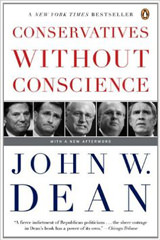
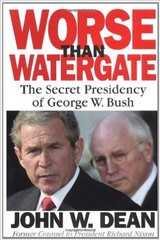
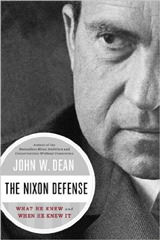
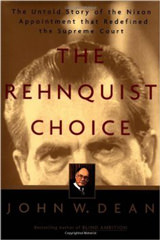
In this first of a two-part series of columns, John W. Dean, former counsel to President Richard Nixon, considers who it is that comprises Donald Trump’s “base.” Dean describes the ways in which polls have correctly and incorrectly described Trump’s supporters and comments on the steady few who seem to support him no matter what.

Professor and resident senior fellow in the Fox Leadership Program at the University of Pennsylvania, Marci A. Hamilton likens the relationship between the #MeToo movement and Donald Trump’s presidency as a David versus Goliath moment. Hamilton describes the contrast in apparent values between the two but finds comfort in the #MeToo movement’s demonstration that there is still identifiable right and wrong that we as a society can see and discuss.

Cornell University law professor Sherry F. Colb considers a question raised, but most likely not to be decided, in a criminal procedure case currently before the US Supreme Court. That case, Collins v. Virginia addresses the automobile exception to the Fourth Amendment warrant requirement, and Colb explores some reasons for eliminating the automobile exception altogether.

SMU Dedman School of Law professor Joanna L. Grossman comments on the most recent high-profile revelation of pay disparity between men and women—that between Mark Wahlberg and Michelle Williams in Ridley Scott’s “All the Money in the World.” Grossman describes the state of pay discrimination laws and while she commends Wahlberg for donating the $1.5 million difference in compensation to the Time’s Up fund, she points out that it was not Wahlberg’s responsibility to rectify this disparity. Grossman calls upon the director Ridley Scott, the agency that represented Williams, and all Hollywood studios and directors to right the wrong of gender pay inequality.

Illinois Law dean and professor Vikram David Amar offers some wisdom he shared during his keynote remarks at the swearing-in ceremony of new lawyers in Springfield, Illinois, describing how lawyers can help build American democracy. Amar comments on the specific duties and responsibilities lawyers swear to uphold, and explains why these duties are critical to the very foundations of our country.

Cornell University law professor Michael C. Dorf comments on the recent announcement by Attorney General Sessions that the Trump Department of Justice was rescinding an Obama administration policy toward state-legal marijuana. Dorf argues that the policy shift breaks promises by then-candidate Trump and then-Senator Sessions, but that objections to the new policy on federalism grounds are largely misguided.

Cornell University law professor Joseph Margulies describes three stories among those who study the criminal justice system that are pejoratively described as “pious.” Margulies explains what it means to be a “pious story,” why such stories exist (because simple narratives are the easiest to translate into policy), and calls upon himself and others on both the Right and Left to abandon “pious” stories and tell whole truths instead.

John W. Dean, former counsel to President Richard Nixon, comments on former Trump campaign manager Paul Manafort’s civil action attacking Special Counsel Robert Mueller. Dean agrees with many other legal commentators that Manafort’s lawsuit is a publicity stunt and posits that, further, it gives Manafort’s lawyers a way to talk about his prosecution by the special counsel without violating the gag order imposed in the criminal case.

Marci A. Hamilton, a professor and resident senior fellow in the Fox Leadership Program at the University of Pennsylvania, reflects on the changes to civil and criminal statutes of limitations (SOLs) for child sex abuse across the United States in 2017, and points out how SOLs relate to the #MeToo movement exposing the breadth and pervasiveness of adult sexual assault and harassment. Hamilton praises the progress made over the past year and but calls upon legislators and politicians at all levels to take additional steps to protect children.